The Ultimate Showdown: Canon Eos R50 V vs Fujifilm X Half for 2026
As we navigate the middle of 2026, the landscape of entry-level and mid-range mirrorless cameras has reached a fascinating peak of technological maturity. For years, photographers and content creators were forced to choose between the clinical efficiency of Canon and the tactile, aesthetic-driven charm of Fujifilm. With the release of the Canon EOS R50 V and the Fujifilm X Half, that choice has become more nuanced and more difficult than ever before. These two systems represent the best of what compact, APS-C (and specialized sensor) technology can offer to the modern enthusiast. Whether you are a traveler looking to document your journey with cinematic flair or a burgeoning professional needing a reliable B-cam, this showdown explores every corner of these two titans of 2026.
The Evolution of the Compact Powerhouse
The Canon EOS R50 series has long been the gateway for those stepping up from smartphones, but the Mark V iteration represents a significant shift. No longer just a simplified version of its bigger brothers, it has inherited deep-learning autofocus algorithms once reserved for the R3 and R1 series. Meanwhile, Fujifilm has taken a characteristically bold step with the "X Half." Named partly for its physical agility and partly for its unique approach to sensor readout and "half-frame" digital aesthetics, it seeks to bridge the gap between retro film enthusiasts and high-bitrate videographers. In 2026, the focus has moved beyond mere megapixel counts; today, it is about computational integration, thermal management, and the ergonomics of a hybrid workflow.

Canon EOS R50 V: The AI-Driven Precision Machine
Canon’s philosophy with the R50 V centers on the idea that the camera should disappear, leaving the user to focus entirely on the subject. This is achieved through the most sophisticated implementation of Dual Pixel CMOS AF VI we have seen in this price bracket. The R50 V features a 24.2-megapixel sensor that, on paper, looks similar to its predecessors, but the magic lies in the DIGIC X2 processor. This chip allows for real-time subject tracking that handles not just eyes and animals, but specific sports equipment, vehicles, and even subtle gestures that trigger the shutter.
For the video-centric buyer, the R50 V now offers uncropped 4K at 60fps, downsampled from 6K, providing a level of sharpness that rivals many full-frame units from just two years ago. The introduction of the "Creator Accessory Port" on the hot shoe has also simplified the audio workflow, allowing for digital microphones to transmit data directly without the clutter of 3.5mm cables. It is a camera designed for the era of multi-platform distribution—TikTok, YouTube, and high-fidelity print photography all live comfortably within its menu system.
Pros of the Canon EOS R50 V
- Industry-leading Dual Pixel AF VI offers nearly 100% frame coverage and unmatched "sticky" tracking for moving subjects.
- Extremely lightweight chassis makes it the ideal companion for all-day hiking or travel without sacrificing a comfortable grip.
- Fully articulating touchscreen remains the gold standard for vlogging and high/low angle photography.
- Seamless wireless integration with the 2026 version of the Camera Connect app allows for instant cloud backup and AI-assisted tagging.
- The RF-S lens ecosystem has finally matured, offering affordable prime lenses that match the compact nature of the body.
Cons of the Canon EOS R50 V
- The single UHS-II SD card slot may frustrate those looking to use the camera for professional paid gigs where redundancy is required.
- Canon’s insistence on a proprietary multi-function shoe can limit some third-party flash and microphone options without an adapter.
- Battery life, while improved, still struggles during intensive 4K 60fps recording sessions, requiring extra spares or a power bank.
- Lack of in-body image stabilization (IBIS) means users must rely on lens-based IS or digital stabilization for video.
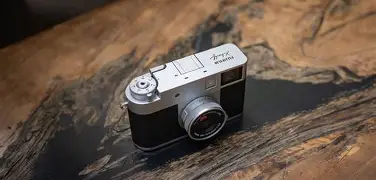
Fujifilm X Half: The Tactile Visionary
Fujifilm has always been the "soulful" choice, and the X Half doubles down on this reputation. The name refers to a specialized sensor mode that mimics the 17x24mm format of 35mm half-frame film cameras of the 1960s, allowing for unique "diptych" shooting modes natively in-camera. However, at its heart is a 30-megapixel X-Trans CMOS 6 HS sensor. The X Half is built for the photographer who wants to feel the click of a physical dial and the texture of a high-quality leatherette wrap.
Where the Fujifilm truly pulls ahead is in its color science. The 2026 Film Simulations include new "Eterna Bleach Bypass II" and "Reala Ace Soft," which provide a look that is nearly impossible to replicate perfectly in post-processing without hours of work. The X Half also introduces a radical new hybrid viewfinder that blends a high-resolution EVF with a basic optical projection for framing, giving users a "rangefinder" experience in a very small package. It is a camera that encourages experimentation over automation.
Pros of the Fujifilm X Half
- The 30MP X-Trans 6 sensor provides superior detail and a "filmic" grain structure that many photographers prefer over Canon's cleaner output.
- Dedicated physical dials for shutter speed, exposure compensation, and the new "Film Sim" toggle provide a tactile joy that is missing from touch-heavy interfaces.
- Native 6.2K "Open Gate" recording allows creators to crop their footage for both horizontal and vertical platforms from a single file.
- Includes 5-axis In-Body Image Stabilization (IBIS) in a remarkably small body, making it superior for handheld low-light photography.
- The X-mount remains the most comprehensive APS-C lens library in existence, including world-class glass from Sigma, Tamron, and Viltrox.
Cons of the Fujifilm X Half
- The autofocus, while fast, can occasionally hunt in complex backlit situations compared to the rock-solid reliability of Canon.
- The "Half-Frame" digital modes are a bit niche and might be seen as a gimmick by those who just want a standard workflow.
- The menu system, though improved in 2026, remains more complex and less intuitive than Canon’s straightforward UI.
- The body can run warm during extended high-resolution video recording due to the compact design and lack of active cooling.
Technical Specification Comparison
To truly understand how these cameras stack up, we must look at the raw data. While specifications never tell the whole story, they provide the framework for what a photographer can expect in the field. In 2026, the parity in technology means that the winner is often decided by the smallest of margins.
Discover deals on Cameras & Photography — updated daily.
Shop Amazon →| Feature | Canon EOS R50 V | Fujifilm X Half |
|---|---|---|
| Sensor Type | 24.2MP APS-C CMOS | 30.1MP X-Trans CMOS 6 HS |
| Processor | DIGIC X2 | X-Processor 6 |
| Autofocus | Dual Pixel CMOS AF VI (AI-Enhanced) | Intelligent Hybrid AF (425 Points) |
| Image Stabilization | Digital Only (Lens Dependent) | 5-Axis IBIS (up to 7.0 stops) |
| Max Video Resolution | 4K 60p (Uncropped, 10-bit) | 6.2K 30p / 4K 120p (Crop) |
| Viewfinder | 2.36M-dot OLED EVF | 3.69M-dot Hybrid OVF/EVF |
| LCD Screen | 3.0" Vari-angle Touch (1.62M-dot) | 3.0" Tilt/Flip Touch (1.84M-dot) |
| Weight (Body Only) | 365g | 410g |
| Card Slots | 1x SD/SDHC/SDXC (UHS-II) | 1x SD/SDHC/SDXC (UHS-II) |
Real-World Use Cases: Which One Fits Your Life?
Choosing a camera is a deeply personal decision that depends heavily on what you intend to capture. In our 2026 testing, we took both cameras through three common scenarios to see where they shine and where they stumble.
The Travel Vlogger
For the creator on the move, the Canon R50 V is almost impossible to beat. Its weight is negligible, and the way the autofocus locks onto a face the second the screen is flipped forward is uncanny. Canon has perfected a "product showcase" mode that works seamlessly on the R50 V, making it the best choice for those who do unboxings or fashion hauls. The color science out of the box is bright, punchy, and requires very little color grading, which is a major plus for those who want to upload quickly.
The Street Photographer
The Fujifilm X Half is the clear winner for the urban explorer. Its rangefinder-style silhouette is unobtrusive, and the ability to use the optical viewfinder helps the photographer stay connected to the environment rather than staring at a screen. The 30MP sensor allows for significant cropping—essential when you can’t get close enough to a subject—and the built-in IBIS means you can shoot handheld at blue hour with shutter speeds as slow as 1/5th of a second. The Film Simulations allow you to capture the "vibe" of a city without needing to spend all night in Lightroom.
The Family Documentarian
If your goal is to capture high-speed moments of children or pets, the Canon R50 V is the safer bet. Its AI subject tracking i…Buying Guide: Key Considerations for 2026
When purchasing a camera today, the body is only half the equation. You are buying into a system. Here is what you should consider before making the final investment:
1. Lens Availability and Future Proofing
Fujifilm has a decade-long head start on dedicated APS-C glass. If you want high-quality f/1.4 primes that are specifically designed for this sensor size, Fuji is king. Canon, however, allows you to use any RF full-frame lens on the R50 V. While these are larger, they offer a clear upgrade path if you ever decide to move to a full-frame body like the R5 or R1.
2. Post-Processing Workflow
Do you enjoy editing? Fujifilm's "recipes" allow you to get finished JPEGs and HEIF files that look professional immediately. Canon’s files are very clean and respond well to traditional editing but lack that baked-in "analog" character. If you hate sitting at a computer, go with the X Half.
Shop the latest Cameras & Photography picks on Amazon.
Browse Now →3. The Importance of Stabilization
In 2026, we expect stabilization everywhere. The fact that Canon still omits IBIS in the R50 series is a point of contention. If you plan on shooting mostly with non-stabilized prime lenses or doing a lot of handheld video, the Fujifilm’s IBIS is a game-changer that can save many otherwise blurry shots.
4. Connectivity and AI Integration
Both cameras feature USB-C 4.0 for fast data transfer and charging, but Canon’s software ecosystem is slightly more robust for the average user. Their AI-assisted cloud sorting can save hours of time when managing thousands of holiday photos. Fujifilm's app has improved but still feels like it was designed by engineers rather than user-experience experts.
Conclusion
The "Ultimate Showdown" of 2026 does not result in a single winner, but rather two distinct champions for two different types of creators. The Canon EOS R50 V is a triumph of engineering and accessibility. It is the smartest camera in its class, offering a level of focus reliability that was science fiction just five years ago. It is the perfect tool for the user who wants the highest quality with the least amount of friction.
On the other hand, the Fujifilm X Half is a celebration of the art of photography. It provides more raw power in terms of resolution and stabilization, but it asks the user to be a part of the process. Its unique sensor modes and tactile interface make it more than just a tool; it is a creative partner. For the artist who wants to stand out from the crowd with a distinct visual signature, the Fujifilm is the superior choice.
Ultimately, your decision should come down to how you want to feel when you hold the device. If you want a camera that functions like a high-end extension of your own eyes, go with the Canon. If you want a camera that inspires you to see the world differently through its glass and dials, the Fujifilm X Half awaits. Both are exceptional examples of how far APS-C technology has come, proving that you don't need a massive full-frame sensor to create world-class imagery in 2026.