Is the Keychron B2 Pro Still Good in 2026? Long-Term Review
I've been using the Keychron B2 Pro as my daily driver for the last seven months, splitting time between a MacBook, a Windows desktop, and an iPad. I bought it expecting a compact, portable mechanical keyboard with solid wireless performance and enough customization to keep me happy without becoming a hobby project. What I found was a keyboard that mostly hit those marks, with a few quirks that only showed up after long-term use. This review is my honest, first-person account of what worked, what disappointed me, and whether the B2 Pro still makes sense in 2026.
Why I picked the B2 Pro
I'm drawn to compact layouts that keep arrow keys and a few navigation keys intact, because I do lots of terminal work and writing. The B2 Pro's small-footprint layout promised the best of both worlds: more compact than a full TKL but more practical than a 60% for daily productivity. I also wanted Bluetooth multi-device pairing, decent battery life, and the option to swap switches without soldering if I got restless. In short: portability, multi-device support, and modability—those were my buying priorities.
Design and build: what it's like day-to-day
Out of the box, the B2 Pro felt light and clean. The case is mostly plastic with a matte finish; it's not the heavy, slab-of-aluminum feel of some premium boards, but that's intentional—this is meant to travel with a laptop. I appreciated the subtlety of the design: low profile, minimal branding, and a stepped keycap profile that doesn't scream "gamer keyboard."
After months of use, the plastic case has held up well to carry-bag scuffs. The detachable USB-C cable still fits snugly and the port hasn't loosened. What I noticed was that the stock keycaps are thin ABS: they developed a bit of shine on the most-used keys (space, E, A) after a few months. That bothered me only cosmetically; the typing feel didn't change, but if you care about long-term appearance you'll likely want to swap to PBT caps sooner than later.
Layout and ergonomics
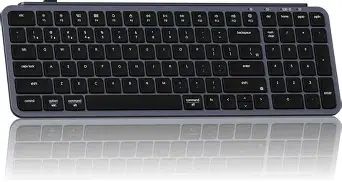
I liked the layout from day one. The B2 Pro keeps a compact 75-ish layout with dedicated arrow keys and a column of navigation keys on the right—small footprint, but usable. In my experience, this layout cuts down on the desk real estate without forcing uncomfortable key combos for arrows. One thing that bothered me: the bottom row is non-standard (as is common in compact boards), which makes some aftermarket keycap sets harder to fit perfectly without sourcing a compatible kit.
Typing experience: switches, stabilizers, and sound
My unit came with tactile switches (Gateron Browns in my case). After using the keyboard for many hours each day, the switches remained consistent—no mushiness or significant wobble developed. The B2 Pro's stabilizers were average at best straight from the factory: they had noticeable rattle on larger keys (space, enter) and a slightly hollow sound. After I lubed the stabilizers and added a modest foam strip inside the case, the typing experience improved dramatically—less rattle, deeper tone, more satisfying thock.
What I found was that the stock sound profile is bright and a touch thin. If you prefer a deeper, quieter sound, you'll want to mod it: foam dampening, lubed stabs, and PBT keycaps are inexpensive upgrades that made a large difference for me. Conversely, if you like a lively, bright-sounding board out of the box, you might be satisfied without changes.
Wireless and wired performance
Bluetooth multi-device switching is one of the B2 Pro's main features, and in my experience it mostly worked well. I've paired it with three devices and switched a lot throughout each day. For typical text work—emails, documents, code—the latency felt negligible. What I noticed after several months is occasional hiccups: a missed keypress or a short dropout when switching devices quickly or when my iPad was asleep and I woke it. These incidents were infrequent and never catastrophic, but they were real.
Looking for the best Laptops & Computers deals on Amazon?
View Offers →Wired performance via USB-C is rock solid. For low-latency tasks (competitive gaming or audio editing where you need absolutely consistent input), I always keep the cable handy. Battery life has been good: with RGB off and moderate daily usage, I reliably got multiple work days per charge. Turn on full lighting and the runtime drops, naturally. After months of charging cycles I haven't seen a notable drop in battery capacity yet.
Software and customization
Keychron offers basic onboard shortcuts for switching layouts (macOS/Windows), toggling backlight modes, and a few function combos for media keys. In my experience, that level of control covers most casual users. However, if you expect deep remapping or advanced macros, that's where the B2 Pro shows its limits: the official software ecosystem is still lean compared to enthusiast boards that support QMK/VIA out of the box.
I tried remapping a couple of keys using the on-board shortcuts and then looked for desktop-based remapping. The experience felt clunky; I ended up using third-party software on macOS to fully remap some keys. If programmability is critical, double-check the exact variant you plan to buy or consider an enthusiast board with native QMK/VIA support.
Durability and long-term behavior
After seven months of daily commuting and constant typing, the B2 Pro shows normal signs of wear: a bit of shine on t…Pros & Cons
- Pros
- I've found the compact layout to be a great balance between size and functionality—arrows and nav keys remain usable.
- Good wireless performance for everyday productivity; multi-device pairing is convenient.
- Portable and travel-friendly: light weight and detachable USB-C cable make it easy to carry.
- Hot-swap variants (if you choose that model) make switch experimentation low-friction.
- Easy-to-improve sound and feel with modest mods (stabilizer lube, foam, PBT keycaps).
- Cons
- Stock keycaps are thin ABS and tend to develop shine; I noticed wear after a few months.
- Factory stabilizers are rattly; they benefit significantly from lube or replacement.
- On-board software and remapping are limited compared to QMK/VIA-compatible boards.
- Bluetooth can stutter occasionally when switching quickly between devices or waking a sleeping tablet.
- Non-standard bottom row complicates aftermarket keycap choices.
Comparison: B2 Pro vs Keychron B2 (original) vs Keychron K2
| Model | Layout | Connectivity | Hot-swap | Stock keycaps | Best for |
|---|---|---|---|---|---|
| Keychron B2 Pro | Compact 75-like with arrows | Bluetooth multi-device + USB-C | Depends on variant; hot-swap options exist | Thin ABS (my unit) | Portable productivity with occasional modding |
| Keychron B2 (original) | Same compact layout | Bluetooth + USB (earlier BT versions) | Some versions soldered; check SKU | Typically ABS | Budget compact mechanical option |
| Keychron K2 | 75% layout (slightly wider) | Bluetooth + USB-C | Many hot-swap options | ABS stock; aftermarket PBT common | Popular 75% with broad accessory support |
This table is intentionally high-level: in my experience, the practical difference is that the B2 Pro trades some heft and premium materials for compactness and portability, while the K2 tends to be the more mainstream 75% choice with broader community support for custom keycap sets and firmware mods.
Buying guide: what to consider in 2026
After testing the B2 Pro for months, here are the practical points I'd recommend you consider before buying in 2026:
- Decide how important hot-swappability is: If you like changing switches often, choose a hot-swap variant. I swapped switches once early on and appreciated not needing a soldering iron.
- Expect to upgrade keycaps: The stock ABS keycaps look and feel fine initially but tend to show shine and wear. I swapped to a PBT set early and it made the keyboard feel and look much better for long-term use.
- Plan for stabilizer tuning: If you care about sound and feel, budget 30–90 minutes to lube the stabilizers and add a thin foam strip. That made the biggest single improvement for me.
- Check firmware and remap support: If you need deep remapping or macros, verify whether the model supports QMK/VIA or whether you'll need third-party tools for your OS.
- Battery expectations: Bluetooth multi-device setups are convenient but occasionally imperfect. If you do latency-sensitive tasks or long gaming sessions, plan to use wired mode.
- Check the bottom row: If you want to use a wide variety of aftermarket keycap sets, make sure they support the board's non-standard bottom row or be ready to source a compatible kit.
- Consider alternatives if you want premium materials out of the box: If you want metal cases and out-of-box PBT keycaps, some competitors and higher-end Keychron models or boutique brands will deliver that without mods.
Practical tips from my mods and workflow
In my experience, a few small upgrades made the B2 Pro feel like a much better keyboard without significant expense or effort:
Discover deals on Laptops & Computers — updated daily.
View Offers →- Lube the stabilizers: I used a light synthetic grease on the wires and dielectric grease on the housing. This reduced rattle significantly.
- Add a thin foam or neoprene layer between the PCB and the case base: this softened the hollow resonance and gave the keyboard a firmer, deeper sound.
- Swap to a PBT keycap set with a compatible bottom row: that addressed long-term shine and legend wear.
- If you need macros, use OS-level remap tools when firmware options are limited—on macOS I used a system-level remapper to fill gaps.
These steps took me a couple of hours total and turned the B2 Pro from "good enough" into "my preferred daily driver."
Who should buy the B2 Pro in 2026?
In my opinion, the B2 Pro still makes sense in 2026 for a few groups of people:
- Writers, developers, and power users who want a compact board with arrows and occasional travel.
- Anyone who values Bluetooth multi-device pairing with reliable day-to-day performance rather than absolute, pro-grade low-latency Bluetooth for gaming.
- Users who don’t mind spending a small amount of time on basic mods (keycaps and stabilizers) for a much improved long-term experience.
It’s less suitable for people who demand out-of-the-box premium materials and sound, or for hobbyists who need deep firmware-level programmability without tinkering.
Conclusion
After using the Keychron B2 Pro for several months, my overall verdict is that it's still a very good keyboard in 2026—especially as a portable, productive mechanical board that balances size, functionality, and value. What I appreciated most was the layout: compact but practical. I was pleasantly surprised by the wireless reliability for everyday tasks and how modest mods dramatically improved the sound and feel.
What bothered me were the small, owner-level issues that show up over time: thin ABS keycaps that develop shine, shaky stabilizers out of the box, and occasionally fussy Bluetooth behavior when switching devices quickly. None of these were dealbreakers for me, but they push the B2 Pro into the territory of a "good base" rather than a finished enthusiast board. With a few inexpensive upgrades it became one of my favorite daily keyboards.
So, is the Keychron B2 Pro still good in 2026? In my experience: yes—if you buy the right variant for your needs, accept that a small amount of modding will unlock its best qualities, and prioritize portability plus practical layout over premium out-of-the-box materials. For many users I know, that's a combination that still hits the sweet spot.