Is the A8H Oled Still Good in 2026? Long-Term Review
I remember the day I brought the Sony A8H OLED home like it was yesterday. It was mid-2020, and the world was a very different place. I was looking for a television that prioritized picture accuracy and motion over flashy benchmarks or gaming gimmicks. Now, standing in 2026, I’ve had this panel running in my living room for nearly six years. In the world of technology, six years is often considered ancient history. We’ve seen the rise of QD-OLED, the refinement of MicroLED, and brightness levels that were once thought impossible for organic displays. But after thousands of hours of runtime, I felt it was finally time to sit down and answer the question that many used-market shoppers and long-term owners are asking: is this television still a viable centerpiece for a modern home theater?
Before I dive into the technical weeds, I want to clarify my perspective. I am a self-proclaimed film purist. While I enjoy a casual round of games, my primary use case for this TV has always been high-bitrate 4K Blu-rays and prestige streaming content. I’ve lived through every firmware update, every OS slowdown, and every concern about panel degradation. What follows is not just a spec sheet analysis, but a chronicle of my lived experience with what many once called the "king of motion."
The Evolution of My Relationship with the Design
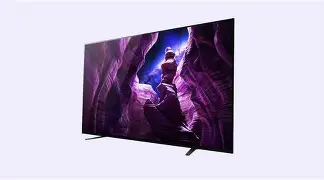
When I first unboxed the A8H, I was struck by its "One Slate" design. In 2026, TVs have become even slimmer, with bezels that are virtually non-existent, yet the A8H doesn’t look dated. I still appreciate the low-profile stance. One thing that always bothered me initially, however, was how close the screen sat to the media console. I had to be extremely selective with my soundbar choice because anything taller than two inches would cut off the bottom of the frame. Eventually, I took advantage of the adjustable feet—which allow you to raise the TV slightly—but even then, it’s a tight fit. After years of looking at it, I still think Sony hit a high-water mark for elegance here. It doesn't scream for attention; it simply provides a window for the content.
I’ve noticed that the build quality has held up remarkably well. There are no creaks in the chassis, and the panel remains perfectly straight. Some modern budget OLEDs I’ve seen recently feel flimsy by comparison. This was clearly built with a premium ethos that has stood the test of time. The remote, however, is a different story. After six years, the most frequently used buttons have lost some of their tactile "click," and the silver finish has started to wear down at the edges. It’s a reminder that while the screen is the star, the touchpoints are where you feel the age.
Picture Quality: Does the X1 Ultimate Still Hold Up?
The heart of this TV is the X1 Ultimate processor. Back in 2020, this was the gold standard for image processing. In 2026, we have Cognitive Processor XR and beyond, which use "human perspective" AI to enhance images. Transitioning between my A8H and a newer 2025 model in my bedroom, I can see where the modern tech wins out—specifically in highlight detail and HDR peak brightness. But here is the surprise: in terms of natural color reproduction and "filmic" texture, I often find myself preferring the A8H.
What I found was that the A8H handles sub-4K content with a grace that some newer processors over-sharpen. I still watch a lot of 1080p content and even some old DVDs of rare indie films. The upscaling on the A8H doesn't try to make a DVD look like 4K; instead, it cleans up the noise and maintains the intended look of the film grain. It’s a "hands-off" approach that I’ve grown to value more as AI upscaling becomes more aggressive and artificial in the mid-2020s.
HDR performance is where the age shows the most, but perhaps not as much as you’d think. In my experience, the A8H hits around 650–700 nits in a calibrated window. Today’s top-tier OLEDs are pushing 1500 or even 2000 nits. When I watch a movie like Mad Max: Fury Road, I do notice that the specular highlights—the sun glinting off the chrome—don't have that eye-searing intensity they have on newer sets. However, because the blacks are "perfect" (as only an OLED can provide), the perceived contrast remains stunning. I was surprised by how little I felt I was missing during dark scenes. The near-black handling on the A8H was legendary at launch, and it still manages to transition from absolute black to dark gray without the "crushing" or "flashing" artifacts I see on some newer, cheaper panels.
The Burn-In Question: My Reality After 6 Years
The biggest fear every OLED owner has is burn-in. I’ll be honest: I haven't babied this TV. I don't leave CNN on for 12 hours a day, but I do watch plenty of letterboxed movies, and my partner spends hours on YouTube with its bright red UI elements. After testing for uniformities using 5% and 10% gray slides recently, I was relieved—and frankly shocked—to find zero visible permanent image retention. Sony’s panel refreshing logic and pixel shift tech clearly did their jobs.
I did notice that the overall brightness of the panel has likely dipped by a small, perhaps imperceptible percentage compared to day one. This is the nature of organic light-emitting diodes; they decay. In a dark room, it’s irrelevant, but in the afternoon with the curtains open, I find myself wishing for just a bit more "oomph" than I used to. If you are considering buying one of these second-hand in 2026, checking the total "Power on Hours" in the service menu is a must. If it’s over 15,000 hours, you might be looking at a panel that is nearing the end of its peak performance window.
Discover deals on TVs & Home Theater — updated daily.
See Deals →Motion and Gaming: The Achilles' Heel
If there is one area where I feel the A8H is undeniably "old," it is gaming. I recently acquired a modern gaming console, and the limitations of this TV became apparent instantly. The A8H lacks HDMI 2.1 ports. This means no 4K at 120Hz, no VRR (Variable Refresh Rate), and no ALLM (Auto Low Latency Mode). For a casual player like me, 4K/60Hz is fine, but I noticed that when I play fast-paced shooters, the input lag is higher than what is standard today. It’s around 18-20ms, whereas modern sets are under 10ms.
One thing that bothered me was a specific bug where the TV sometimes fails to trigger HDR when switching inputs from a console, requiring a hard reboot of the Android OS. It didn't happen in the first year, but as firmware updates slowed down, these little stability issues started to creep in. If you are a hardcore gamer, the A8H is simply not the tool for the job anymore. It is a cinema machine, first and foremost.
On the flip side, for sports and movies, the motion handling remains the best I’ve ever seen. Sony’s "X-Motion Clarity" for OLED was introduced with this model, and it uses black frame insertion without the massive drop in brightness that plagued earlier models. When I watch a football match, the ball doesn't "ghost" or "stutter" across the screen. It feels fluid and real. In my experience, even the newest flagship TVs from competitors struggle to match the motion cadence that Sony perfected back in 2020.
The Smart TV Experience in 2026
The A8H launched with Android TV 9. Over the years, it was updated to the Google TV interface. In 2020, the UI felt sn…I eventually bit the bullet and bought an external 4K streaming stick. It felt a bit redundant at first, but it breathed new life into the TV. If you’re planning to run this TV in 2026, I highly recommend bypasssing the internal smarts entirely. It saves you from the occasional "System UI has stopped" errors that have started to pop up once every few weeks.
Sound Quality: Acoustic Surface Audio
I have to mention the sound, because it’s one of the few TVs I’ve owned where I didn't feel the immediate need for a soundbar. Sony uses actuators behind the panel to vibrate the glass, essentially turning the entire screen into a speaker. Six years later, it still feels like magic. When a character on the left side of the screen speaks, the sound actually comes from the left side of the screen. It adds a level of immersion that a traditional bottom-firing speaker just can't match. While it lacks the deep bass of a dedicated subwoofer, the midrange clarity is excellent for dialogue. I still use the built-in speakers for late-night watching to avoid waking the house with the subwoofer, and I’m never disappointed.
Pros and Cons Summary
- Pro: Extraordinary motion handling that still rivals 2026 flagship models for sports and cinema.
- Pro: Superior upscaling of legacy content (720p/1080p) compared to modern budget-friendly OLEDs.
- Pro: Acoustic Surface Audio provides excellent dialogue clarity and spatial accuracy.
- Pro: Build quality and aesthetic design that remains elegant and premium years later.
- Pro: Exceptional near-black handling and color accuracy out of the box.
- Con: Lack of HDMI 2.1 features (4K/120Hz, VRR) makes it a poor choice for serious gamers.
- Con: Peak HDR brightness is significantly lower than modern QD-OLED or MLA-OLED panels.
- Con: The internal Google TV hardware is starting to show significant lag and storage limitations.
- Con: Stand design is very low, making soundbar placement difficult without adjustments.
Technical Comparison: 2020 vs. 2026 Standards
To give you a better idea of where this stands, I’ve put together a comparison of the A8H against what we now consider "Standard" for a mid-to-high end OLED in 2026.
| Feature | Sony A8H (2020) | Modern Mid-Range OLED (2026) |
|---|---|---|
| Peak Brightness (HDR) | ~650 nits | ~1200 - 1800 nits |
| HDMI Ports | 4x HDMI 2.0b | 4x HDMI 2.1 |
| Refresh Rate | 120Hz (Panel) / 60Hz (Input) | 120Hz / 144Hz (Native Input) |
| Gaming Tech | None | VRR, G-Sync, FreeSync, ALLM |
| Primary Processor | X1 Ultimate (Image focus) | Cognitive AI / Neural (Scene focus) |
| Operating System | Google TV (Legacy hardware) | Google TV / Proprietary (Fast hardware) |
Buying Guide: Decisions for 2026
If you are looking at the A8H in 2026, you are likely either an owner deciding whether to upgrade or a buyer looking at the secondary market. Here is my honest advice based on my years with the unit.
Discover deals on TVs & Home Theater — updated daily.
Shop Amazon →For Current Owners
If your A8H is still healthy and you primarily watch movies, don't upgrade yet. Unless you are moving to a much larger size (like 77 or 83 inches) or you are moving the TV to a very bright room, the jump in picture quality to a standard 2026 OLED is incremental, not revolutionary. You already have some of the best motion and color processing ever made. Buy an external streaming device to fix the slow UI, and you’re good for another two years.
For Potential Buyers (Used Market)
The A8H can be a steal if you find it for the right price, but you must be careful. I wouldn't pay more than 30% of its original retail price at this stage. You need to verify the panel health. Look for a "tint" on white screens (common as OLEDs age) or any signs of static UI elements burnt into the 5% gray background. If the seller was a heavy gamer or a news junkie, walk away. But if it was a bedroom TV used for movies, it will likely outperform any brand-new $600 LED TV you could buy today.
Who Should Avoid the A8H?
If you own a PS5 Pro, an Xbox Series X, or a high-end gaming PC, this is not the TV for you. You will be leaving so much performance on the table. Similarly, if your living room has floor-to-ceiling windows and you do most of your watching during the day, the A8H’s lack of modern brightness-boosting tech (like MLA or Quantum Dots) will leave the image looking washed out and reflective.
Final Thoughts: The Legacy of the A8H
After six years, my A8H has become a reliable friend. It has been the vessel for countless movie nights, emotional series finales, and hundreds of hours of sports. While I do find myself occasionally envious of the searing brightness of the newest panels I see in showrooms, that envy usually evaporates the moment I turn off the lights and put on a high-quality 4K Blu-ray. There is a "rightness" to the image on the A8H—a lack of digital tinkering that makes films feel like films.
One thing that surprised me the most over this long-term journey was how much I valued the reliability of the image over the novelty of features. I don't use the voice assistant, I don't use the built-in ambient mode, and I don't care about the lack of 144Hz. What I care about is that when I sit down to watch The Godfather, the shadow detail in the opening scene is exactly where it needs to be. The A8H still delivers that in spades.
In conclusion, the Sony A8H is a testament to the idea that a well-engineered display can outlast the hype cycle. It isn't the best TV on the market in 2026—not by a long shot—but it remains a "great" TV. It serves as a reminder that specs aren't everything. If you find one in good condition, or if you still have one in your "man cave" or living room, cherish it. They don't quite make the motion processing like this anymore, and for some of us, that's the most important spec of all.