I Switched to the Pixel 10 Pro Fold and Here is What Happened
Introduction
Each year, the mobile industry pushes the boundaries of what a smartphone can be. Foldables have gone from futuristic concepts to functional daily drivers, capturing the curiosity of tech enthusiasts and average consumers alike. In 2026, Google’s Pixel 10 Pro Fold enters this competitive arena, boasting meaningful improvements and a unique perspective on what a foldable can offer. For buyers tired of the typical glass slab, the Pixel 10 Pro Fold represents a bold alternative. But does real-world use justify the switch?
This in-depth review explores everyday experiences with the Pixel 10 Pro Fold, from setup to productivity, entertainment, and photography. Through a balanced editorial lens, it dissects performance, software, design, battery life, and more—providing answers to core questions: What actually changes when you switch to a foldable? Is the investment worthwhile for mainstream users? Here’s everything you need to know if you’re considering Google’s flagship foldable for your next upgrade.
First Impressions & Setup
Unboxing the Pixel 10 Pro Fold, the striking first impression is its premium build. Google departs from the formulaic look of previous foldables, introducing a refined matte aluminum frame, subtle colorways, and a remarkably slim profile. The hinge mechanism feels robust—silent and smooth, without creaks or wiggles. The cover display, at 6.5 inches, offers ample space for single-handed use and everyday tasks without opening the device.
Setup is seamless, especially for current Pixel or Android users. Google’s Quick Switch feature migrates accounts, apps, and media with minimal friction, and the in-device guidance is clear. The setup process takes into careful account the first-time foldable user, highlighting unique gestures and fold-focused features.
Display & Hinge Experience
The Pixel 10 Pro Fold’s main 7.8-inch LTPO OLED screen opens up to a nearly crease-free, dynamic-panel canvas. Colors are vibrant, blacks are deep, and brightness is impressive even outdoors—addressing a common pain point in prior foldables. The ultra-thin glass, coated for fingerprint resistance, feels as luxuriously smooth as any premium slate phone.
Critically, the hinge is engineered for confidence. Google's magnetic clasp system holds the Fold shut in a pocket or bag, while allowing for easy one-handed opening. This eliminates the awkwardness found in some rival designs. The "Flex Mode"—where the phone stays propped at any angle—makes hands-free video calling and multitasking natural.
Performance & Software Experience
Under the hood, the Pixel 10 Pro Fold is powered by Google’s latest Tensor G5 chipset coupled with 16GB RAM. Real-world use is snappy: multitasking, split-screen browsing, heavy gaming, and video editing are handled with ease. The unique advantage, however, lies in Google’s folding software optimizations.
Discover deals on Mobile Phones — updated daily.
Shop Amazon →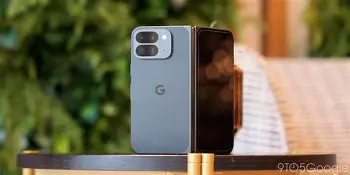
- App Continuity: Seamless transition when moving from the cover to the main display (and vice versa). Viewing a map, message, or email doesn’t break the flow.
- Adaptive Taskbar: A persistent taskbar allows for quick app launches and easy drag-and-drop multitasking, reminiscent of a small tablet experience.
- Third-Party App Support: Major apps, from Instagram to productivity suites, are optimized for both single and dual-screen modes.
Android 16's foldable UI adapts intelligently: split keyboards, contextual resizing, and gesture customizations smooth out the learning curve. For those reliant on Google’s ecosystem—Docs, Drive, Photos—the Fold enhances productivity in a way flat phones cannot match.
Camera System
Historically, foldable phones have lagged behind in camera performance due to hardware constraints. The Pixel 10 Pro Fold changes that dynamic with a triple-lens setup borrowed from the Pixel 10 Pro flagship:
- 50MP Wide Sensor: Delivers sharp details and lifelike colors in daylight and low light alike.
- 50MP Ultrawide:
Battery Life & Charging
The Pixel 10 Pro Fold houses a dual-cell 5000mAh battery, striking a balance between capacity and thinness. In daily use, the device sails through a typical day (8-10 hours active) with around 20-25% battery remaining at bedtime. Screen-on time averages 6-7 hours, depending on usage patterns, thanks to the intelligent refresh rate scaling between 1Hz and 120Hz.
Wired charging is fast (45W USB-PD), topping off the device in about an hour. Wireless charging is supported, albeit at slower speeds. Notably, heat management is excellent, and Google’s Adaptive Battery system learns which apps to prioritize, extending longevity over time.
Durability Considerations
Long-term durability is often cited as a reason to avoid foldables. Google gives the Pixel 10 Pro Fold an official IPX8 water resistance rating, improved hinge dust shielding, and a reinforced glass-polyamide composite for the folding display. In real-world use, accidental keys-and-phone-bag abrasions leave little to no marks. The included case and pre-applied screen protector further help, though users should remain mindful—any foldable is inherently more complex than a standard phone.
Discover deals on Mobile Phones — updated daily.
Shop Amazon →Everyday Use Cases
The Pixel 10 Pro Fold adapts to various daily scenarios. Here’s what users typically experience:
- Productivity: Multitasking with spreadsheets, email on one side, and a video call on the other. Split-screen drag-and-drop is intuitive.
- Reading & Media: The large internal display turns commutes into eBook and comic sessions. Watching movies is immersive, with crisp speakers and minimal bezels.
- Photography: Folded, the camera matches the best smartphones. Open, it offers creative shooting modes and propped group selfies without a tripod.
- Social Media & Messaging: Larger keyboard and split chat windows streamline group conversations.
- Portability: Closed, the Fold is pocketable. The hinge resists accidental openings but isn’t difficult to use one-handed.
Pros & Cons
- Pros:
- Innovative large inner display—ideal for work and media
- Excellent cover display for quick tasks and single-handed use
- Best-in-class camera system for a foldable
- Smooth software, polished multitasking, and productivity features
- Robust hinge and durable build with water resistance
- Fast wired charging and reliable battery life
- Cons:
- Heavier and thicker than standard flagship phones
- Higher price than non-folding alternatives
- Potential for display crease over years of use (though minimized)
- Third-party app optimization still not universal
- No expandable storage (as with most recent flagships)
Comparison: Pixel 10 Pro Fold vs. Key Rivals
Feature Pixel 10 Pro Fold Samsung Galaxy Z Fold6 OnePlus Open 2 Main Display 7.8" LTPO OLED, 2200 nits 7.6" AMOLED, 2100 nits 7.8" OLED, 1800 nits Cover Display 6.5" 6.3" 6.4" Processor Google Tensor G5 Snapdragon 8 Gen 3 Snapdragon 8s Gen 3 RAM / Storage 16GB / 512GB, 1TB 12GB / 256GB, 512GB 18GB / 512GB Main Camera 50MP wide, 50MP ultrawide, 48MP telephoto (5x) 50MP wide, 12MP ultrawide, 10MP telephoto (3x) 64MP wide, 48MP ultrawide, 32MP telephoto (4x) Battery 5000mAh 4600mAh 4800mAh Charging 45W wired, wireless 25W wired, wireless 80W wired, wireless Water/Dust Resistance IPX8 IPX8 No official rating Weight 253g 239g 245g Software Android 16 (Pixel Fold UI) Android 16 (OneUI Fold) Android 16 (Oxygen OS Fold) Buying Guide: Should You Switch to the Pixel 10 Pro Fold?
Who is this foldable for?
The Pixel 10 Pro Fold targets users who want smartphone convenience with tablet-like possibilities in a single device. Power users, content creators, and those who multitask extensively will benefit most. If you’re already embedded in Google’s ecosystem, the Fold’s software experience feels like a natural extension.
Who should wait or consider alternatives?
Buyers who prioritize a compact, featherweight phone, or those seeking the lowest price, may find non-foldables more practical. If you rely on niche apps that aren’t optimized for folding displays, or need expandable storage, the Fold’s tradeoffs may be less appealing.
Checklist: Is the Pixel 10 Pro Fold right for you?
- You want both a phone and tablet in your pocket—but only want to carry one device.
- You use your phone for multitasking, productivity, and creative work on the go.
- You're comfortable with a slightly heavier device to gain versatility.
- You value the best possible camera system on a foldable.
- Your budget matches flagship-tier pricing, and you prefer investment in innovative form factors.
What to consider when buying a foldable
- Durability: Look for robust hinge design, water and dust resistance, and warranty coverage.
- Software Support: Confirm your key apps offer foldable mode optimizations.
- Upgrade Path: Ensure the latest security and feature updates, especially on the Android platform.
- Accessory Ecosystem: Check for compatible cases, screen protectors, and docks.
- Buy from trusted vendors: Return and repair options are crucial for complex hardware like foldables.
Conclusion
Switching to the Pixel 10 Pro Fold is more than a hardware change—it challenges daily habits, productivity flows, and digital expectations. In real-world use, the larger inner display, seamless software, and robust camera system genuinely transform both work and play. Google’s iterative refinements have mitigated many foldable drawbacks, from durability to app compatibility.
Mainstream buyers still face tradeoffs: a premium price, added weight, and the occasional adapted gesture. Yet for those wanting a device that flexes to fit every scenario—literally and figuratively—the Pixel 10 Pro Fold sets a new standard in 2026. It’s a future-forward phone worth serious consideration, signaling that foldables are ready for the spotlight—and daily life—in a way they’ve only promised before.