Biggest Smart Tank 7301 6001 7001 Buying Mistakes (And How to Avoid Them)
The shift from traditional inkjet cartridges to high-capacity ink tank systems has revolutionized home and small office printing. HP’s Smart Tank 7000 series—specifically the 6001, 7001, and 7301 models—represents a significant step forward in this technology. These machines promised to solve the age-old frustration of expensive ink replacements by offering thousands of pages of output from a single set of bottles. However, as these printers have populated home offices and small businesses, a pattern of common consumer errors has emerged. Buying a premium ink tank printer is a long-term investment, often costing three to four times more upfront than a budget cartridge printer. Making the wrong choice among these three similar-looking models, or failing to understand their specific operational requirements, can lead to a case of immediate buyer's remorse. This guide explores the most frequent mistakes made when purchasing the Smart Tank 7301, 6001, and 7001, and provides a roadmap for selecting the right hardware for specific printing needs.
Understanding the Smart Tank 7000 Series Ecosystem
Before diving into the mistakes, it is essential to understand what these printers are and where they sit in the market. The HP Smart Tank 6001, 7001, and 7301 are all thermal inkjet printers designed around the "Continuous Ink Supply System" (CISS) philosophy. Unlike the older generations of ink tank printers, which often felt like standard printers with tanks awkwardly bolted to the side, the 7000 series features a fully integrated design where the tanks are built into the chassis. They all utilize pigmented black ink for sharp text and dye-based color inks for vibrant graphics and photos. They are marketed as sustainable, high-volume solutions intended to reduce waste and lower the total cost of ownership. However, while the core printing engine is similar across the range, the feature sets vary significantly, and this is where most buyers stumble.
Mistake #1: Ignoring the Automatic Document Feeder (ADF) Requirement
Perhaps the most frequent error made by buyers is failing to account for how they handle multi-page documents. The HP Smart Tank 6001 and 7001 are "flatbed-only" scanners. This means every time a user needs to scan a five-page contract or a stack of receipts, they must manually lift the lid, place the paper, scan, remove it, and repeat the process for every single page. In a busy home office, this is a massive productivity killer.
The HP Smart Tank 7301 is the only model in this specific trio that includes an Automatic Document Feeder (ADF). The ADF allows a user to drop a stack of up to 35 pages into a tray and walk away while the printer handles the scanning or copying of the entire stack. Many buyers opt for the 6001 or 7001 to save a small amount of money upfront, only to realize within the first month that they spend far too much time standing over the printer. If the workflow involves anything more than the occasional single-page scan, skipping the 7301 is a major logistical mistake.
Mistake #2: Overestimating (or Underestimating) Print Volume Needs
The Smart Tank series is built for volume. HP includes enough ink in the box to last for approximately two years of "typical" home use, or up to 8,000 color pages. A common mistake is buying these printers for extremely low-volume tasks. If a user only prints one or two pages a month, an ink tank printer is actually a poor choice. Because the ink remains in the lines and printheads, infrequent use can lead to clogs and drying, which requires "cleaning cycles" that waste ink. In a low-volume scenario, the premium paid for the tank system is never recouped through ink savings.
Conversely, some buyers underestimate their volume and choose the entry-level 6001 for a high-traffic office. While the 6001 is capable, it lacks the paper handling capacity and speed of the 7301. The 7301 and 7001 models offer slightly faster print speeds and more robust internals designed for the "prosumer" or small business owner. Selecting the 6001 for a five-person office can lead to bottlenecks and premature wear on the mechanical components.
Mistake #3: Confusing the 6001 and 7001 Feature Sets
At a glance, the Smart Tank 6001 and 7001 look nearly identical, leading many to believe they are the same machine with different model numbers for different retailers. However, the 7001 introduces several quality-of-life improvements over the 6001. One notable difference is the inclusion of an "out of paper" sensor and a more sophisticated magic touch-panel interface on the higher models. The 7001 also typically offers better connectivity stability and slightly higher ISO print speeds. Buyers who choose the 6001 assuming it is identical to the 7001 often find themselves missing the more intuitive interface and the faster processing times that become evident during large print jobs. While the 6001 is an excellent "value" entry point, it is optimized for the home user rather than the home-office professional.
Mistake #4: Misunderstanding Paper Handling and Input Capacity
The "7000" designation across these models suggests a certain level of heavy-duty performance, but the 6001 specifically has a smaller input tray compared to the 7301. The 7301 and 7001 models feature a 250-sheet input tray, which is a full ream of paper half-sized. The 6001 usually features a smaller 150-sheet tray. For a user who prints 50 pages a day, the 150-sheet tray requires refilling every three days, which can be an annoyance. Buyers often overlook the tray capacity, focusing only on the "pages per minute" metric, but in a real-world environment, the frequency of paper replenishment is a significant factor in user satisfaction.
Shop the latest Electronics picks on Amazon.
Browse Now →Pros and Cons of the Smart Tank 7000 Series
To help navigate these choices, it is useful to look at the strengths and weaknesses that apply to this specific family of printers. While they share a brand name, their performance in a workspace varies.
- Pros:
- Incredible Ink Economy: The cost per page is a fraction of a cent for black and white and only slightly more for color, making them the gold standard for high-volume inkjet printing.
- Dual-Band Wi-Fi: All three models utilize self-healing, dual-band Wi-Fi, which automatically detects and resolves connectivity issues, a common headache in older home printers.
- Automatic Two-Sided Printing: All models in this series support "duplexing," allowing users to save paper without manually flipping pages.
- Sustainability: Made from recycled plastic and utilizing refillable bottles, these printers significantly reduce the amount of plastic waste compared to standard cartridges.
- HP Smart App Integration: One of the best software suites in the industry for mobile scanning, printing, and checking ink levels remotely.
- Cons:
- High Upfront Cost: The initial purchase price is significantly higher than competing cartridge-based models.
- Setup Time: Unlike "plug and play" cartridge printers, these require careful filling of ink tanks and a calibration process that can take 15 to 20 minutes.
- No Specialty Photo Black: While they print photos well, they lack the dedicated "photo black" or "grey" inks found in high-end dedicated photo printers, meaning professional photographers may find the black levels in glossy photos slightly lacking.
- Physical Footprint: They are larger than the compact inkjet printers of the past to accommodate the internal tank reservoirs.
Mistake #5: Neglecting the Warranty and Maintenance Requirements
A mistake unique to ink tank printers is the assumption that because they don't use cartridges, they are maintenance-free. These printers utilize user-replaceable printheads. While these printheads are designed to last a long time, they are not permanent. Buyers often fail to check the warranty terms regarding the printheads. Some regions offer an extended warranty upon registration, which is vital for a machine intended to last 5+ years. Furthermore, ignoring the occasional "printhead cleaning" utility in the software can lead to permanent damage if the lines are allowed to air out during long periods of non-use.
Comparative Analysis: 7301 vs. 7001 vs. 6001
To visualize the differences and avoid the mistake of buying the wrong specs, refer to the table below which highlights the critical hardware differences between the three units.
| Feature | Smart Tank 6001 | Smart Tank 7001 | Smart Ta…
Mistake #7: Buying for the Wrong Type of "High Quality"Buyers often mistake "high volume" for "professional lab quality." The Smart Tank 7000 series produces excellent everyday prints, very good color graphics, and respectable photos. However, a common mistake is purchasing the 7001 or 7301 with the intent of running a professional photography or art-selling business. Because these printers use a four-color system (CMYK) where the black is pigment-based, printing on certain types of glossy paper can result in "bronzing" or a lack of depth in the shadows compared to a dedicated photo printer that uses five or six distinct ink colors. If your primary goal is high-end photo reproduction, the mistake is buying a tank printer optimized for office documents rather than one designed specifically for photography. Smart Tank Buying Guide: How to ChooseTo avoid the mistakes outlined above, a systematic approach to the purchase is required. Follow these steps to ensure the selected model aligns with the actual workload. Step 1: The "Stack" TestLook at the documents you typically scan or copy. Do you mostly scan a single ID card or a one-page form? If so, the 6001 or 7001 is sufficient. Do you frequently have to scan multi-page tax documents, medical records, or school assignments? If the answer is yes, the 7301 is your only logical choice. Saving money by losing the ADF will cost you hours of manual labor over the life of the machine. Step 2: Evaluate Your Network InfrastructureIf your router is in the same room and you have a clear Wi-Fi signal, any of the three models will perform well. However, if you are setting this up in a basement, a garage office, or a thick-walled room, you need to check if you have a data drop (an Ethernet jack) available. If you do, buy the 7301. Relying on patchy Wi-Fi for a printer that is supposed to be a workhorse is a recipe for frustration. Find top-rated Electronics products at great prices. Browse Now →Step 3: Calculate Your Weekly Page CountThe Smart Tank series becomes more cost-effective as you print more. If you print under 20 pages a week, you might actually be better off with a cheaper cartridge-based "Envy" series model, as you will likely never use the 8,000 pages of ink before the printheads reach their mechanical age limit. If you print 50-200 pages a week, the 7001 strikes a great balance. If you are printing 200+ pages a week, the 7301’s speed and larger paper tray become essential for maintaining sanity. Step 4: Consider the Interface and AestheticsFor some users, the "Magic Touch Panel" on the 7001 and 7301 is a deal-maker. It hides the buttons until they are needed, giving the printer a sleek, minimalist look that fits well in a modern home office. The 6001 has more visible, traditional buttons. While this doesn't affect print quality, a common mistake is ignoring the ergonomics of the machine you have to interact with every day. 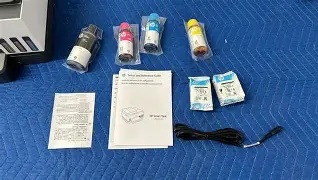
Real-World Use Case: The Small Business OwnerConsider a small e-commerce entrepreneur who needs to print 50 shipping labels, 50 packing slips, and scan 20 purchase invoices every week. Initially, this user might look at the Smart Tank 6001 because it is the most affordable. However, applying our "mistake-avoidance" logic, we see that the 6001 would require them to scan those 20 invoices one page at a time on the flatbed, and they would have to refill the 150-sheet paper tray twice a week. By upgrading to the 7301, they gain an ADF to scan all invoices in one batch and a 250-sheet tray that lasts the whole week. The slightly higher price of the 7301 pays for itself in time saved within the first three months. Real-World Use Case: The Family with StudentsA family with two high school students and one parent working from home often prints a mix of research papers, colorful presentations, and the occasional photo. In this scenario, the 7001 is often the "sweet spot." It provides the faster printing speeds needed when everyone is rushing to get work done on Monday morning, and the 250-sheet tray means the printer doesn't run out of paper in the middle of a 40-page project. Unless the family is frequently scanning multi-page documents, they can skip the 7301 and save a bit of money, but the 6001 might feel a bit slow and undersized for a household of four. Maintenance Habits to Prevent Long-Term IssuesThe final mistake people make AFTER they buy is failing to maintain the tank system correctly. To keep your Smart Tank 7301, 7001, or 6001 running for years, follow these rules:
ConclusionChoosing between the HP Smart Tank 6001, 7001, and 7301 is a matter of matching your patience and your productivity needs to the machine's hardware capabilities. The biggest mistakes are almost always centered around ignoring the convenience features like the ADF, underestimating the value of paper tray capacity, or buying a high-volume machine for a low-volume lifestyle. By identifying whether your workflow requires the automated scanning of the 7301, the moderate capacity of the 7001, or the basic economy of the 6001, you can ensure that your transition to the ink tank world is a successful one. These printers are built to last for thousands of pages; making the right choice at the start ensures that those thousands of pages are printed without frustration or regret. Get the Best Price on ElectronicsFind exclusive deals and offers on Amazon today. Find Best Prices →
As an Amazon Associate I earn from qualifying purchases.
|
|---|