A Professional's Take on the New Rx100 Vii
Introduction
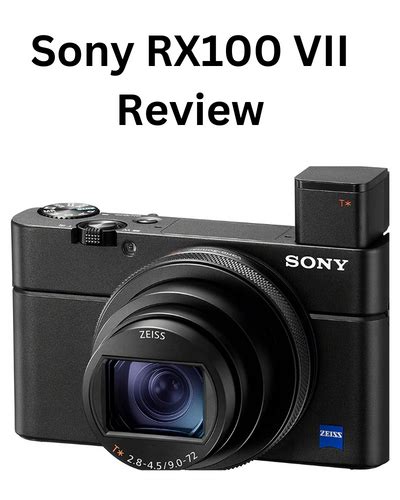
The compact camera market has undergone a radical transformation over the last decade. As smartphone sensors grew larger and computational photography became the industry standard for casual snapshots, the "point-and-shoot" era largely faded into obscurity. However, a specific niche emerged for enthusiasts and professionals: the premium compact. At the forefront of this evolution sits the Sony Rx100 series, a line that has consistently pushed the boundaries of what is possible with a one-inch sensor. The Rx100 Vii represents the pinnacle of this lineage, often described by industry veterans as an "Alpha 9 in your pocket." This article examines the device from a professional perspective, looking past the marketing jargon to see how it performs in the hands of those who demand reliability, speed, and uncompromising image quality in a form factor that fits into a jacket pocket.
For the professional photographer or videographer, a compact camera is rarely the primary tool for a scheduled shoot. Instead, it serves as a secondary B-roll machine, a high-quality "scouting" camera, or a personal daily carry that ensures no moment is lost to the limitations of a phone. The Rx100 Vii targets this exact user by bridging the massive gap between portability and professional-grade performance. It is a tool designed for those who understand that the best camera is the one you have with you, provided it doesn't force you to sacrifice the autofocus speed and dynamic range you’ve come to expect from full-frame systems.
Detailed Product Analysis: The Professional Workflow
Sensor and Image Processing
At the heart of the Rx100 Vii is a 20.1-megapixel 1.0-type stacked CMOS sensor, paired with the latest BIONZ X image processing engine. While the resolution remains consistent with previous iterations, the "stacked" architecture is what differentiates this camera from the competition. By integrating memory directly onto the sensor chip, Sony has enabled data readout speeds that were previously unthinkable in this category. This speed is the foundation for the camera's most impressive feat: blackout-free shooting at up to 20 frames per second.
From a professional standpoint, the image quality is remarkably robust for a one-inch sensor. In daylight or well-lit environments, the RAW files provide surprising latitude for color grading and shadow recovery. While it cannot compete with a full-frame sensor in extreme low-light scenarios, the noise reduction algorithms and the clarity of the Zeiss Vario-Sonnar T* 24-200mm lens ensure that images remain usable even at ISO 3200 for web delivery or small-scale print. The color science has also seen subtle improvements, leaning more toward the natural skin tones found in the newer Alpha series bodies, moving away from the slightly greenish tints that plagued earlier Sony models.
The 24-200mm Lens: A Versatile Workhorse
The transition from the f/1.8-2.8 lens (found in the V and VA models) to the f/2.8-4.5 lens in the Vii was a controversial move. However, for the professional traveler or documentarian, the extended reach to 200mm (equivalent) is often more valuable than the extra stop of light at the wide end. The lens construction includes four AA (advanced aspherical) lenses and two ED (Extra-low Dispersion) glass elements, which effectively minimize chromatic aberration and peripheral distortion. At the 200mm end, the compression allows for striking portraits and architectural details that simply aren't achievable with shorter focal lengths. The built-in Optical SteadyShot provides approximately 4.0 stops of stabilization, which is critical when shooting at the telephoto end or during handheld video capture.
Autofocus Performance: The Alpha 9 DNA
If there is one reason for a professional to choose the Rx100 Vii over its competitors, it is the autofocus system. With 357 phase-detection points covering 68% of the frame and 425 contrast-detection points, the speed of acquisition is 0.02 seconds. In real-world use, this means the camera "sticks" to a subject with an almost uncanny tenacity. The inclusion of Real-time Tracking and Real-time Eye AF (for both humans and animals) changes the way one shoots with a compact camera. You no longer have to worry about focus recomposition or hunting in mid-burst; you simply touch the subject on the screen, and the camera maintains focus even as they move rapidly through the frame.
Video Capabilities and Vlogging Integration
Sony clearly recognized the growing demand for high-end video in small packages. The Rx100 Vii records 4K video with full pixel readout and no pixel binning, resulting in incredibly sharp footage with minimal moiré. Professionals will appreciate the inclusion of S-Log3 and HLG (Hybrid Log-Gamma) for HDR workflows, allowing the compact footage to be more easily color-matched with footage from an A7S III or FX3. Perhaps the most significant "quality of life" upgrade for videographers is the addition of a 3.5mm microphone jack. Large-scale audio capture has always been the Achilles' heel of compact cameras, and the ability to mount a small shotgun mic or a wireless receiver turns this pocket camera into a genuine production tool.
Looking for the best Electronics deals on Amazon?
View Offers →Pros and Cons
- Unmatched Autofocus: The Real-time tracking and Eye AF are class-leading, making it the most reliable compact camera for moving subjects and spontaneous moments.
- Blackout-Free Shooting: The ability to track a subject through a continuous 20fps burst without the screen blinking is a feature usually reserved for $5,000 professional bodies.
- Exceptional Zoom Range: The 24-200mm equivalent lens covers almost every standard focal length, reducing the need to carry multiple lenses or a larger interchangeable lens camera.
- Professional Video Tools: 4K HDR, S-Log3 support, and a dedicated microphone input make it a viable B-camera for professional video workflows.
- High-Speed Internal Processing: The Single Burst Shooting mode allows the capture of 7 frames at up to 90fps, perfect for capturing the exact millisecond of a fast-action event.
- Diminishing Low-Light Performance: The f/2.8-4.5 aperture, while versatile, means the camera struggles more in dark environments compared to the older f/1.8 models.
- Ergonomics for Large Hands: The desire for portability means the body is very small; without an aftermarket grip, it can feel slippery and difficult to operate during long shoots.
- Menu Complexity: Sony's traditional menu system remains dense and can be overwhelming for those not already familiar with the Alpha ecosystem.
- Battery Life: The NP-BX1 battery is small, and heavy use of 4K video or high-speed bursts will necessitate carrying several spares for a full day of shooting.
Comparison: Rx100 Vii vs. The Premium Compact Market
When evaluating the Rx100 Vii, it is important to see how it stacks up against its closest rivals. While some cameras offer larger sensors or faster lenses, none quite match the specific combination of speed and reach that Sony has engineered here.
| Feature | Sony Rx100 Vii | Canon G7X Mark III | Ricoh GR III |
|---|---|---|---|
| Sensor Type | 1.0-type Stacked CMOS | 1.0-type Stacked CMOS | APS-C CMOS |
| Lens Equivalent | 24-200mm f/2.8-4.5 | 24-100mm f/1.8-2.8 | 28mm f/2.8 (Fixed) |
| Autofocus Points | 357 Phase / 425 Contrast | 31 Contrast-based | Hybrid (Phase/Contrast) |
| Max Burst Speed | 20 fps (No Blackout) | 20 fps (With Blackout) | 4 fps |
| Mic Input | Yes (3.5mm) | Yes (3.5mm) | No |
| Video Max | 4K 30p (Log/HLG) | 4K 30p | 1080p 60h |
Real-World Use Cases
The Travel Professional
For a travel journalist or photographer, weight is the enemy. Carrying two full-frame bodies and a trio of f/2.8 zooms is exhausting and often draws unwanted attention. The Rx100 Vii excels as a specialized travel tool. The 24-200mm range allows you to capture a wide street scene and a tight detail of a cathedral's spire without changing gear. Its diminutive size makes it "invisible" in sensitive areas where a large DSLR might be banned or viewed with suspicion. Professionals use the Vii to scout locations, capturing the light and composition accurately enough to make creative decisions before returning with larger gear.
The Event and Behind-the-Scenes (BTS) Photographer
When working on a film set or at a high-profile event, the BTS photographer needs to be silent and o…Social Media and High-End Vlogging
Modern content creators require a tool that can transition seamlessly between stills and video. The flip-up screen on the Rx100 Vii is perfect for self-framing, and the improved image stabilization in video (Active Mode) allows for relatively smooth "walk and talk" shots. Because it supports vertical video metadata, it streamlines the workflow for those producing content for smartphones. The microphone jack is the "pro" feature here, allowing for clean audio—the most important factor in viewer retention.
Buying Guide: Is the Rx100 Vii Right for You?
Choosing a premium compact involves balancing your specific needs against the high entry price of these devices. The Rx100 Vii is not a "budget" camera, and its value proposition depends entirely on how you intend to use its advanced features.
Who Should Buy It?
If you are a professional who already uses the Sony Alpha system, the Rx100 Vii is the perfect companion. The parity in menu systems, AF behavior, and color profiles makes it a seamless transition. It is also ideal for the "action" enthusiast—parents of athletes, wildlife hikers, or aviation fans—who need the reach and speed of a sports camera but cannot or will not carry a telephoto lens setup. Furthermore, if your work requires high-quality 4K footage in a stealthy format, this camera has no equal.
Discover deals on Electronics — updated daily.
See Deals →Who Might Look Elsewhere?
If your primary interest is low-light street photography or indoor events without flash, the older Rx100 V (or VA) might actually be a better choice due to its faster f/1.8 lens, despite the shorter 24-70mm zoom range. Additionally, if you prefer the "feel" of a camera and don't need a zoom lens, an APS-C fixed-lens camera like the Ricoh GR series offers superior raw image quality and a more tactile, simplified interface, albeit with much slower autofocus and fewer video features.
Essential Considerations
When purchasing the Rx100 Vii, buyers should consider the "hidden" requirements of the system. To truly utilize the 4K video and high-speed bursts, you will need UHS-I U3 or UHS-II SDXC cards. You should also factor in the cost of an external charger and at least two spare batteries. For many professionals, the Sony AG-R2 Attachment Grip is a non-negotiable addition; it adds a small rubberized handle to the front of the camera that significantly improves one-handed stability without increasing the footprint in a pocket.
Conclusion
The Sony Rx100 Vii is a masterclass in engineering, compressing a staggering amount of professional technology into a device no larger than a deck of cards. It serves as a reminder that "small" does not have to mean "compromised." While the aperture trade-off for a longer zoom lens may not suit every photographer, the addition of the world's most advanced autofocus system in a compact body more than compensates for the slight loss in light-gathering capability.
In the hands of a professional, the Rx100 Vii is more than just a camera; it is a versatile failsafe. It is the tool that ensures you never miss a shot because your main rig was in the bag, or because you were too tired to carry ten pounds of glass. It brings the speed and intelligence of high-end mirrorless systems to the everyday experience of photography. While it may be an investment, for those who value the intersection of extreme portability and professional performance, it remains the gold standard in the premium compact market. Whether you're capturing 20fps bursts of a falcon in flight or recording a 4K interview on a crowded street, the Rx100 Vii delivers results that consistently punch well above its weight class.